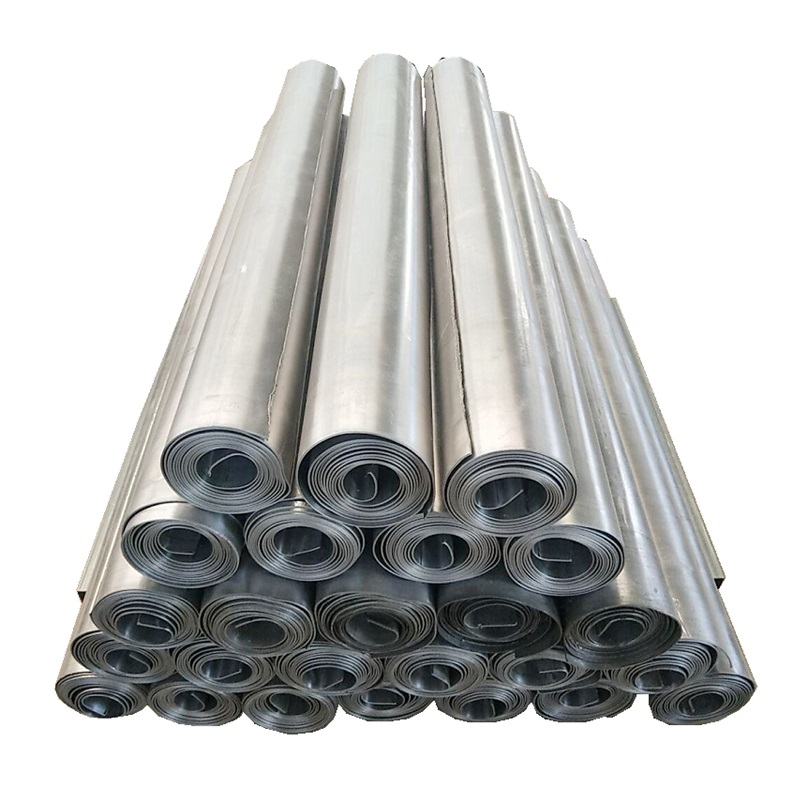
Lead Sheet for Gasket Applications: Why Soft Lead Works for Sealing Joints

Lead sheet is one of the traditional soft metallic gasket materials widely adopted across sealing industries. Thanks to its outstanding malleability, pure lead sheet can deform evenly under bolt torque to fill minor surface irregularities on flange faces, creating a tight, leak-free seal.
Unlike rubber gaskets that degrade at high temperatures or strong acid environments, lead gaskets perform reliably at continuous temperatures up to 250°C and show excellent resistance against many corrosive chemicals. That makes lead sheet a preferred sealing material for rubber vulcanizing machines, steam pipelines and acid service equipment where rubber gaskets cannot survive long.
Pure lead sheet (99.9% Pb, thickness from 0.45 mm to 3 mm) can be cut, stamped or fabricated into custom lead gaskets and special-shape lead sealing parts. It is widely used for static sealing joints in vulcanizers, chemical vessels and battery terminals.
Key advantages of lead sheet gaskets:
- High ductility, good conformability for uneven mating surfaces
- Good corrosion resistance to sulfuric acid and many industrial media
- Stable sealing performance under thermal cycling
- Easy to fabricate into custom shapes
- Vibration damping property
Limitation note: Lead is not suitable for strong alkaline conditions. Proper handling protection is required during processing and installation.
Why Lead Outlasts Copper and Rubber